The end of the financial year (EOFY) in Australia ends on June 30, 2026 and marks a crucial deadline for submitting tax returns and finalising financial records. According to the Australian Taxation Office (ATO), this period is vital for meeting compliance obligations and maximising lawful deductions and refunds. Whether you’re an employee lodging an individual tax return in Australia or a business owner handling complex records, doing your preparation early can save time, reduce stress, and improve outcomes.
Why Early EOFY Preparation Matters
Preparing early for EOFY 2026 gives you time to organise documents, correct issues, and discover opportunities to maximise your refund.
Avoid stress and last‑minute errors
Rushing your tax return can lead to mistakes that trigger ATO reviews or adjustments. Systematic preparation helps you double‑check income sources, deductions, and records.
Maximise lawful deductions
Proper bookkeeping and record‑keeping help you claim every deduction you’re entitled to. This is often overlooked by individuals and small business owners who wait until the last minute. A clear EOFY bookkeeping checklist helps track receipts, invoices, and expense categories that can reduce taxable income.
Improve refund timing
Preparing early allows you to lodge as soon as the tax returns open, helping you receive a tax refund in Australia sooner if you’re eligible. Early lodgment may also prevent delays created by ATO processing backlogs.
The ATO offers many preparation resources, including an EOFY checklist and guidance for businesses on record‑keeping and deductions.
Who Needs to Prepare for EOFY 2026
If you have earned income or operated a business during the 2025–26 financial year, you’ll likely have obligations at EOFY.
Individuals
People who receive wages, salary, investment income (like dividends or rental earnings), or government benefits need to prepare an EOFY tax return. This includes investors and individuals with multiple income streams.
Freelancers and Sole Traders
Self‑employed individuals, contractors, and freelancers must record all business transactions and claim deductions accurately. As a sole trader tax return Australia entrant, you’ll report business income, expenses, and potentially claim GST or PAYG installments if applicable.
Small Businesses
Small business owners must ensure bookkeeping is accurate, payroll withholding (like PAYG withholding 2026) is correctly reported, and business activity statements are reconciled. Small business structures include companies, trusts, and partnerships.
Employers
Employers need to finalise wages, report any fringe benefits, and make sure PAYG withholding and superannuation are lodged correctly.
Key Dates and Deadlines for EOFY 2026
Deadlines depend on how you lodge and what type of taxpayer you are. Missing deadlines can lead to penalties and interest on tax payable.
Individual Tax Return Deadlines
- Standard lodgment deadline: Usually October 31, 2026, if you lodge your individual tax return in Australia yourself.
- If you use a registered tax agent and you’re on their client list by October 31, you typically get extended time to lodge. Confirm due dates with your agent.
Small Businesses and Sole Traders
- Lodging may align with your tax agent’s schedule once you’re on their roster by October 31.
- Business Activity Statements must be filed quarterly or monthly, with final quarters often due by the same time as EOFY requirements.
PAYG Withholding
Employers must finalise and report employee tax statements and meet PAYG withholding 2026 lodgment and payment deadlines. The ATO sets specific due dates for annual reporting.
Consequences of Late Submission
Lodging late without an approved extension can result in failure‑to‑lodge penalties, interest charges on tax owed, and delays in refunds.
Preparing Your Individual Tax Return Australia
Filing an EOFY tax return can seem daunting, but breaking it into steps helps.
Step 1: Gather Income Records
Collect all sources of income from the financial year:
- Income statements reported by employers (available via myGov/AusKey).
- Bank interest and dividends
- Rental property income
- Business or freelance earnings
- Capital gains from investment sales
Having accurate records reduces errors and audit risk.
Step 2: Identify Eligible Deductions
You can claim deductions that are directly related to earning your income. Common deductible items include:
- Work‑related expenses (uniforms, tools, travel) if not reimbursed
- Self‑education expenses related to your current job
- Home office running costs (if you work from home)
The ATO provides detailed advice on allowable deductions and what records you need to keep. Too often, taxpayers miss eligible deductions. Organised records throughout the year make this easier.
Step 3: Use Tools or Software
You can lodge your return:
- Online through myGov, linked to the ATO
- Using tax preparation software approved by the ATO
- Through a registered tax agent
Each method has pros and cons. Online lodgment is free and direct, but a tax agent can help identify deductions and handle complexity.
Step 4: Check Records Before Lodgment
Review your figures. Common errors include transposed numbers, missed income sources, or incorrectly claimed deductions. Double‑checking reduces the chance of amendments later.
Make sure you know exactly which documents are required for your tax return to avoid mistakes and future corrections.
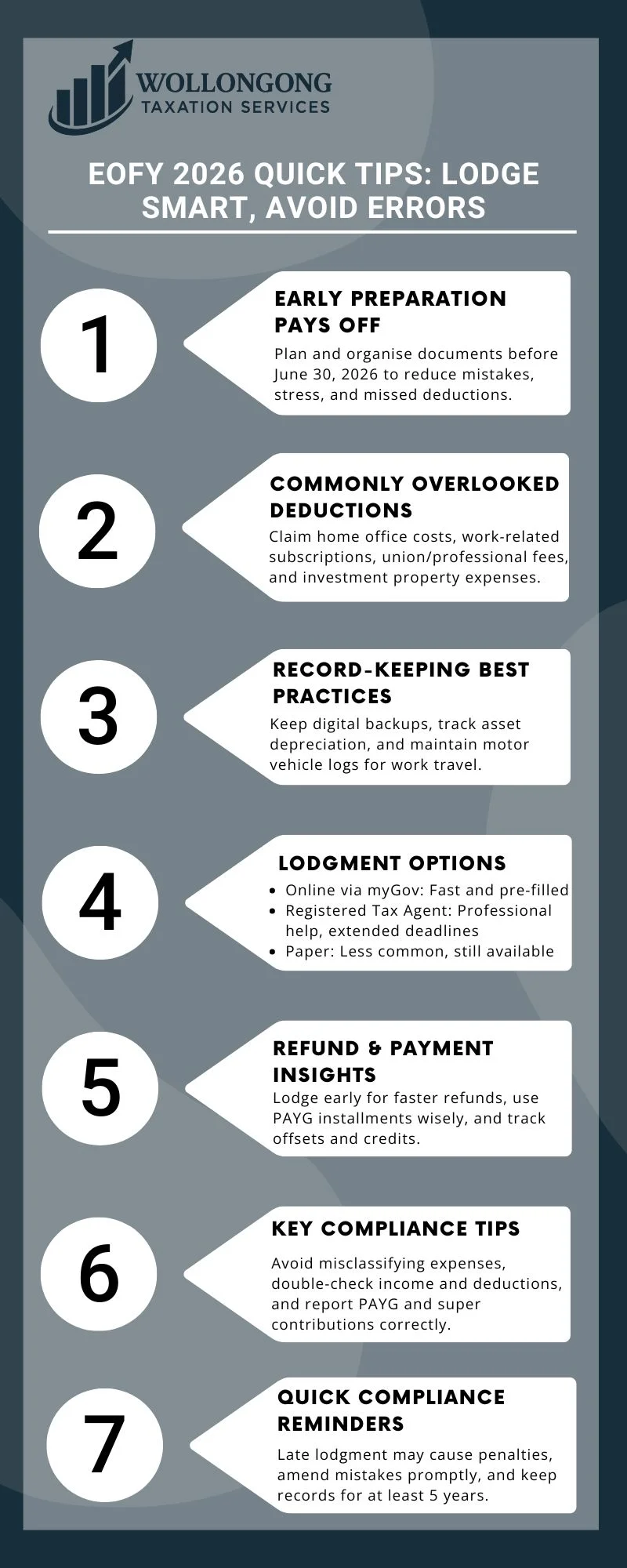
EOFY 2026 Quick Tips Lodge Smart, Avoid Errors
EOFY Checklist Australia 2026 for Individuals and Small Businesses
A thorough checklist keeps you organised and compliant.
Income and Payment Records
- PAYG payment summaries or income statements
- Bank interest, dividends, and investment income
- Rental property receipts and expenses
- Business or freelance earnings
- Government support payments
Expense Documentation
- Receipts for work‑related expenses
- Invoices for business purchases
- Home office costs (internet, utilities portion)
- Motor vehicle logs if claiming work travel
- Records relating to assets depreciated during the year
Government Forms and Compliance
- BAS statements for businesses
- Superannuation documentation for employees paying contributions
- PAYG withholding summaries if you employ staff
Every item has a role in establishing income and deduction entitlements. Keeping digital copies and using a structured system makes EOFY easier.
Sole Traders and Small Business Tax Return
Small business owners and sole traders face additional considerations during EOFY.
Unique Filing Requirements
Sole traders must report all business income and expenses on their individual return. Companies, trusts, and partnerships file different tax forms. Accurate records ensure taxable income is correct.
Deductions and Concessions
Small business concessions include:
- Immediate deductions for certain depreciating assets
- Simplified depreciation rules
- Home‑based business deductions
Mismatch or poor record‑keeping can result in missed opportunities.
PAYG and Super Obligations
You must meet PAYG liabilities if you pay employees. Annual reporting schedules are distinct from monthly or quarterly BAS filings. Getting this right avoids penalties.
Record‑Keeping and Compliance
Keep:
- Detailed ledgers
- Invoices and receipts
- Digital backups of all records
The Australian Taxation Office provides a complete guide to the tax obligations and responsibilities of small businesses.
Distinct Needs for Sole Traders
Unlike incorporated entities, sole traders use simpler structures but are personally liable for tax. Ensure you track income accurately and meet personal and business obligations.
Maximising Your Tax Refund Australia
Getting the biggest lawful refund or the smallest lawful liability starts with knowing what you can claim.
Understand Deductible Expenses
Professionally, the ATO lists categories of deductible expenses that include:
- Work‑related costs (uniforms, vehicles, training)
- Investment‑related expenses
- Self‑education and professional subscriptions
Each category has rules. For example, only work‑related travel not reimbursed by an employer can be claimed.
Common Overlooked Deductions
Taxpayers often miss:
- Home office running expenses
- Digital subscriptions are necessary for work
- Union or professional fees
- Investment property expenses
Document these throughout the year so nothing is missed at EOFY.
Tax Offsets and Credits
Tax offsets may reduce the amount of tax you pay, sometimes increasing refunds. These vary by income, age, and work status.
Use of a Registered Tax Agent
Many Australians engage a registered agent to ensure they claim all entitlements legally and avoid errors. If you choose this route, ensure you enrol with them early in the lodgment season so they can secure extended deadlines.
Lodging Tax Returns in 2026: Step‑by‑Step
How you lodge depends on your structure and complexity.
Online Lodgment
Most individuals and sole traders use myGov linked to the ATO. It pre‑fills many fields, reducing data entry, but you must verify all figures.
- Sign in to myGov.
- Select “Tax.”
- Check pre‑filled data (income statements, Medicare levy details).
- Add deductions and other income not pre‑filled.
- Review and submit.
Tax Agent Lodgment
If you use a registered agent, provide all records early. Agents follow ATO guidelines and can often secure later deadlines.
Paper Lodgment
Rare now but still available. Ensure your form is the correct year’s version and post it well before deadlines.
Mistakes to Avoid
- Incorrect income figures
- Saying you earned income, not actually received
- Claiming unsubstantiated deductions
- Missing supporting documentation
The Australian Taxation Office suggests verifying your personal details, checking your calculations, and keeping proof of lodgment.
Common Mistakes and Compliance Risks
Tax returns can trigger compliance reviews if they contain errors or omissions.
Frequent Errors
- Misclassifying business vs. personal expenses
- Inaccurate reporting of income
- Unsupported deductions
- Late lodgments
Penalties
The ATO can apply failure‑to‑lodge penalties or interest on unpaid tax. For business owners, incorrect PAYG withholding reporting can lead to further compliance issues. For taxpayer obligations and consequences, the ATO penalty framework outlines possibilities clearly. Understanding these risks helps you take corrective steps early.
Conclusion
Preparing for EOFY 2026 requires early planning, organised records, and awareness of deadlines. Individuals, freelancers, sole traders, and small business owners benefit from following structured checklists, tracking deductions, and lodging accurately. Consulting ATO guidance ensures compliance, while professional support can maximise refunds and minimise errors.
Simplify your EOFY 2026 tax return today with Wollongong Tax Services. Our team helps individuals, sole traders, and small businesses prepare, lodge, and maximise deductions efficiently. Contact us now to start your EOFY preparation and stay compliant with Australian tax rules.
FAQs
What are the benefits of lodging early, even if I don’t expect a refund?
Lodging early helps you avoid penalties if you owe tax, gives more time to organise payments, and reduces the chance of errors caused by rushed submission at the deadline.
Do I need to declare foreign income on my 2026 tax return?
Yes, all Australian residents for tax purposes must declare worldwide income, including foreign salary, interest, dividends, or property earnings. Certain tax treaties may provide relief from double taxation.
How do PAYG installments affect my tax return?
If you pay PAYG installments, these amounts are credited against your final tax liability. Accurate reporting ensures you neither underpay nor overpay, which can prevent interest charges or unnecessary refunds.
Can I amend my 2026 tax return after lodgment?
Yes, if you discover an error or omission after submitting your EOFY 2026 tax return, you can request an amendment through the ATO. Typically, individuals have up to two years to amend a return for most cases, but businesses may have different timeframes.
How does pre-filling information in myGov work?
myGov pre-fills your tax return with information the ATO already has, such as salary, bank interest, dividends, and some government payments. However, you are responsible for reviewing all entries, adding missing deductions, and verifying accuracy.