A sole trader is one of the simplest business structures in Australia. It is easy to start, easy to manage, and perfect for people who want full control over their income and decisions. Many Australians choose this structure because it is flexible and suitable for small to medium businesses.
In this guide, you will learn the sole trader meaning, how it works in Australia, the Sole Trader ATO rules, sole trader tax rate, and how to lodge a sole trader tax return. Everything is explained in simple words, so it is easy to follow.
What Is A Sole Trader?
A sole trader is a business structure where one person owns and runs the business. The owner and the business are legally the same entity. This means the owner receives all the profits, but also carries all the risks.
This structure is popular because it is simple to set up, low-cost, and gives full control to the owner.
Some key points are:
- The owner controls all decisions
- The owner is legally responsible for all business debts
- The income of the business is treated as personal income
- The business does not have a separate tax file number
This means that the owner must follow ATO rules for personal income tax.
Why Do Many Australians Choose The Sole Trader Structure?
Many people in Australia select this structure because it is easy to manage. There is less paperwork than in other business types, and the owner has full freedom to run the business in any direction.
It is also perfect for:
- Freelancers
- Independent contractors
- Tradespeople
- Small shop owners
- Part-time side businesses
There is no need for partners, directors, or investors. The owner is free to work directly.
Setting Up As A Sole Trader In Australia
The process is straightforward. You only need a few basic steps. Below is a clear breakdown to help you understand everything before you start.
Step 1: Make Sure A Sole Trader Structure Suits Your Situation
Before you start, think about:
- The level of risk in your business
- Whether you prefer total control
- The amount of paperwork you are comfortable handling
- Your long-term growth plans
A sole trader structure is excellent for small or simple operations. However, if your business grows, you might want to move to a company structure later.
Step 2: Apply For An Australian Business Number (ABN)
You must have an ABN to run a business legally in Australia. It is free to apply for it on the Australian Business Register website.
ABN is important because:
- It helps you invoice clients
- It allows you to register for GST
- It makes your business look professional
- It is required for tax obligations
Step 3: Choose A Business Name
If you want to trade under any name other than your personal name, you must register a business name through the Australian Securities and Investments Commission (ASIC).
Choose a name that is:
- Clear
- Professional
- Easy to remember
Step 4: Keep Accurate Records
Record-keeping rules are guided by the ATO. You must keep:
- Sales records
- Expense records
- Bank statements
- GST records (if registered)
Proper records help with tax time and reduce mistakes.
Step 5: Understand ATO Requirements For Sole Traders
The Sole Trader ATO guidelines explain that the business income is treated as personal income. You must lodge your sole trader income tax return with your personal tax return using your individual TFN.
Step 6: Register For GST If Required
You must register for Goods and Services Tax if your business earns more than 75,000 dollars per year. If your income is lower, registration is optional.
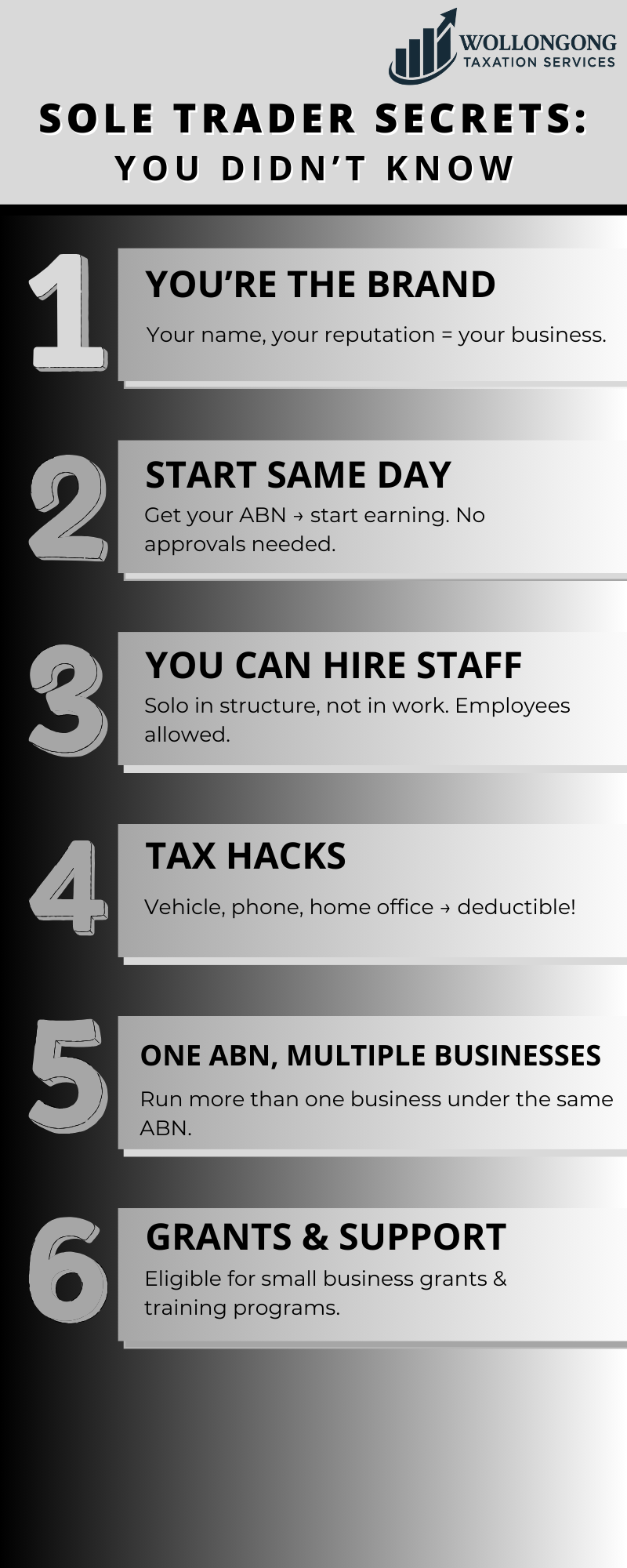
Sole Trader Secrets: You Didn’t Know
Sole Trader Tax Rate In Australia
A sole trader does not pay a separate business tax rate. Instead, the income is taxed using the individual tax rates set by the ATO.
How The Sole Trader Tax Rate Works
- Business earnings are added to personal income
- Your tax rate increases as your income increases
- Deductions reduce your taxable income
Below is a simple table for visual understanding.
Sole Trader Tax Information (Simple Overview)
|
Topic |
Explanation |
|
Tax Rate |
Based on individual ATO tax brackets |
| Tax Return Type |
Individual tax return with business income |
|
ABN Requirement |
Yes, required for business activity |
| GST Requirement |
Required if income exceeds 75,000 dollars |
| Business Expenses |
Deductible if they relate to income-earning |
How To Lodge A Sole Trader Income Tax Return?
Filing your sole trader tax return is an important responsibility. It shows the ATO your earnings, expenses, and tax obligations.
Step 1: Report Your Total Business Income
You must calculate:
- Sales
- Services
- Cash payments
- Online payments
- Work completed through platforms
Everything earned through the business must be declared.
Step 2: Claim Business Deductions
Sole traders are allowed to claim expenses that help earn income.
Examples include:
- Tools
- Equipment
- Software
- Work supplies
- Vehicle costs (business use only)
- Home office expenses
- Marketing costs
These deductions lower your taxable income.
Step 3: Lodge Through Mytax Or A Registered Tax Agent
You can lodge online through the ATO’s myTax system or use a registered professional tax agent.
A tax agent will help avoid mistakes and keep your records compliant.
Pros And Cons Of A Sole Trader Structure
Pros
- Simple and easy to set up
- Low cost to operate
- Full control over decisions
- Fewer reporting obligations
- Suitable for many industries
Cons
- Unlimited personal liability
- Harder to raise funds
- May not suit large businesses
- Income is taxed at personal rates
When You Might Change From A Sole Trader To A Company?
Many people start as sole traders and later change to a company structure when:
- The business income grows rapidly
- They want to limit personal liability
- They want to hire more staff
- They want a more formal structure
- They want separate business assets
A professional tax service will guide you through this decision.
Final Thoughts
A sole trader structure is an excellent starting point for anyone who wants to run a simple and flexible business in Australia. It gives full control, low operating costs, and easy management. By understanding the sole trader meaning, the Sole Trader ATO rules, the sole trader tax rate, and how to lodge a sole trader income tax return, you will be ready to run your business with confidence. Keep good records, follow ATO guidelines, and stay informed as your business grows. If you ever feel unsure, support from a tax professional will make your journey much easier.
If you want expert help with your tax return, business setup, or bookkeeping, visit Wollongong Tax Services for reliable support.
Read More:
ATO BAS Lodgement Guide: How to File Accurately and Avoid Penalties
FAQs
What Is The Basic Meaning Of A Sole Trader?
A sole trader is a business run by one person who is legally responsible for all profits, losses, and debts. The business and the owner are the same legal entity.
What Is The Tax Rate For A Sole Trader In Australia?
A sole trader pays tax using the individual tax rates. Business income is added to personal income, and the total amount is taxed according to ATO tax brackets.
How Does A Sole Trader Lodge A Tax Return?
A sole trader lodges a personal income tax return and includes business income. It is lodged through myTax or a registered tax agent.
Does A Sole Trader Need An ABN?
Yes, an ABN is required for invoicing, tax reporting, GST registration, and legal business operations.
What Are The ATO Rules For Sole Traders?
Sole traders must keep clear records, declare all business income, lodge an annual tax return, and register for GST if the income exceeds 75,000 dollars.