
The words “tax audit” can make anyone uneasy. It often brings up images of long letters, tight deadlines and unexpected bills. But a tax audit in 2026 does not have to feel like a storm rolling in out of nowhere. In most cases, it starts with something small. A mismatch in data. A missing return. A deduction that looks unusual.
Across tax audits Australia, the Australian Taxation Office (ATO) uses more data and smarter systems each year. That means errors are easier to spot. The good news is that most audits are manageable when you understand how they work.
This guide explains what an ATO tax audit involves, why audit activity may increase in 2026, what penalties can apply, and how to lower your risk.
What Is a Tax Audit?
A tax audit is a review by the Australian Taxation Office to check that your tax return or business activity statements (BAS) are complete and accurate. Think of it as a closer look at your books rather than a punishment. The ATO wants to make sure everyone pays the right amount of tax and follows the rules.
Tax audits can range from a simple check of a few items to a more detailed review of your financial records. Most audits are triggered because something in your tax affairs doesn’t fully match ATO systems or benchmarks. According to the Australian Taxation Office, they can start with a data review or a risk‑based selection and move into more detailed checks if needed. It’s worth noting a tax audit doesn’t always mean wrongdoing. Sometimes it’s just a request for clarification or supporting documents.
Why Tax Audits May Increase in 2026
There are signs that tax compliance Australia wide will stay under close watch in 2026. The ATO has made it clear that data and technology are central to its strategy. There are a few common reasons tax audits might rise in 2026.
1. Increased ATO Data Matching
The ATO now uses computer‑assisted verification: e-audit risk assessment tools to match data from banks, employers, super funds, and digital platforms against what you claim on your return. When ATO systems spot mismatches, they can trigger reviews or audits more often than in the past.
2. Focus on Small Businesses and Sole Traders
Small businesses and sole traders often have more complex records and varying income. This complexity can create more opportunities for discrepancies or simple mistakes. The ATO’s attention here is partly because it’s where discrepancies are statistically more likely.
3. Digital Transactions and Online Income Tracking
Online income sources like ride‑sharing, Airbnb or digital marketplaces are now routinely reported to the ATO through data matching. This means income earned through these platforms is more visible than ever to the ATO. As a result, missing or understated income is more likely to be picked up and probed.
These developments mean a more data‑rich environment, leading the ATO to target discrepancies earlier and more efficiently.
Who Is Most at Risk of a Tax Audit in 2026?
Some taxpayers and businesses naturally attract more scrutiny from the ATO than others. This doesn’t automatically mean something is wrong in your affairs, but it does mean the ATO is more likely to check carefully.
Late or Missing Tax Returns
If you consistently lodge your return late, it signals non‑compliance and increases your audit risk. Lodging on time is a simple way to build trust with the ATO.
Large or Unusual Deductions
Claiming deductions that are unusually large compared to your income can look unusual to the ATO. If deductions exceed industry norms, this is often one of the first things the ATO checks.
Cash‑Based Businesses
Businesses that deal heavily in cash, like cafes or trade services, can be flagged for audit more often because cash transactions are harder to verify independently.
GST Reporting Inconsistencies
Errors between income tax returns and Business Activity Statements (BAS) are common triggers. If figures differ year‑to‑year without clear reasons, the ATO may reach out. This is where accurate BAS & GST compliance becomes essential.
Rental Property and Investment Income Errors
The ATO increasingly matches rental income data with what you report. Mistakes like incorrect interest deductions or missing rental income items can draw attention.
For individuals, ensuring your personal tax returns are accurate and complete helps reduce audit triggers. Honest mistakes can still invite questions, but a well‑prepared return reduces the chances of deeper scrutiny.
Common Triggers for a Tax Audit
Certain patterns or claims on your tax return make it more likely the ATO will take a closer look. Many of these come from the ATO’s own data‑matching and risk‑review systems.
Repeated Late Lodgements
If GST returns, PAYG instalments, BAS or income tax returns are lodged late, this suggests poor compliance and may prompt further review.
Mismatch Between Income and Lifestyle
The ATO compares what people report with external information like bank interest, employer data and government records. If you report low income but have high spending or lifestyle indicators, the ATO may follow up.
Incorrect GST Claims
Claiming GST credits without proper supporting documentation is a frequent trigger. Common errors here include overstated GST credits or claims that don’t align with reported sales.
Work‑From‑Home and Car Expense Claims
Incorrect or unjustified work‑from‑home or vehicle claims are regularly flagged. Without a proper logbook or records, these deductions can seem inflated.
Cryptocurrency and Online Income Omissions
Income from digital assets, online marketplaces or overseas sources is increasingly visible to the ATO through data matching. Missing this income can trigger an audit.
In each case, the ATO’s goals are to ensure your tax compliance and Australia obligations are met and to confirm that deductions and credits are legitimate and supported.
What Happens During a Tax Audit?
Getting an audit letter can be unsettling, but knowing what to expect helps.
Initial Contact from the ATO
The ATO usually contacts you first in writing, explaining the scope of the audit and what they need. This may come through your MyGov inbox or by post. The letter outlines specific areas they want reviewed.
Information and Document Requests
Auditors often ask for supporting documents such as invoices, bank statements, receipts, or contracts. Preparing these in advance speeds things up and shows good organisation.
At this stage, the ATO may also ask for explanations in plain language. For example, they might want to understand an unusually large work‑from‑home deduction or an uncommon business expense.
Review and Clarification Process
Once you provide the documents, the ATO reviews them alongside what was lodged. This is where the risk review and audit tools match your information to third‑party data. If something doesn’t align, they’ll ask follow‑up questions.
This part of the process is constructive. ATO guidance will help you to clarify errors or provide additional evidence. Your responses help auditors determine if adjustments are needed.
Audit Outcome and Adjustments
After the review, the ATO will advise you of the outcome. If everything checks out, you receive confirmation that no changes are needed. If adjustments are required, they will explain what changes they’re making and why.
If there are adjustments, you may owe extra tax plus interest and penalties. The ATO usually gives clear reasons and a way to respond or ask questions if you disagree.
Penalties and Interest You May Face in 2026
Understanding penalties and interest helps you see exactly what’s at stake.
Failure to Lodge on Time Penalty
If you miss a deadline like October 31 for income tax returns, the ATO may apply a failure to lodge (FTL) penalty. For individuals and small businesses, this starts at a set amount and increases every 28 days until a capped maximum.
Administrative Penalties
If the ATO finds errors or omissions after a review, it can impose penalties. These vary depending on whether the issue was careless, reckless or intentional. For example, lack of reasonable care penalties start at a portion of the shortfall, while deliberate disregard carries higher penalties.
Shortfall Interest Charge (SIC)
If you owe additional tax after adjustments, the ATO charges interest on the difference from the original due date until it’s paid. This interest is compounding and can add up quickly.
General Interest Charge (GIC)
GIC applies when you have unpaid tax by the due date. This is separate from shortfall interest and accrues daily.
Penalties and interest are designed to keep the system fair by discouraging late lodgement and inaccurate reporting. You can reduce penalties significantly by disclosing errors early and cooperating fully with the ATO.
How to Prepare for a Tax Audit
Preparation is the best way to reduce stress and risk.
Keep Accurate Records
Good record keeping is the backbone of tax compliance. Keep copies of receipts, invoices, bank statements, contracts and correspondence for at least five years. The ATO’s record‑keeping requirements stress accuracy and accessibility. Professional bookkeeping services can help ensure your records meet ATO standards and are audit-ready.
Review Past Tax Returns
Look back at your previous returns and check for common errors like missed income, wrong expense categories or GST misalignments between tax returns and BAS.
Fix Errors Early
If you find mistakes before the ATO does, you can voluntarily correct them. This often results in reduced penalties. A voluntary disclosure done before audit contact is one of the most effective ways to minimise consequences.
Respond Promptly to ATO Notices
When the ATO asks for information or clarification, don’t delay. Quick, professional responses show cooperation and can shorten the audit process.
Seek Professional Advice
If things feel complex, consult a registered tax agent. Their expertise helps ensure your records are compliant and ready for scrutiny.
Also make sure you know what tax return documents you need and have them organised upfront. Having a checklist of essentials makes audit preparation smoother and less stressful.
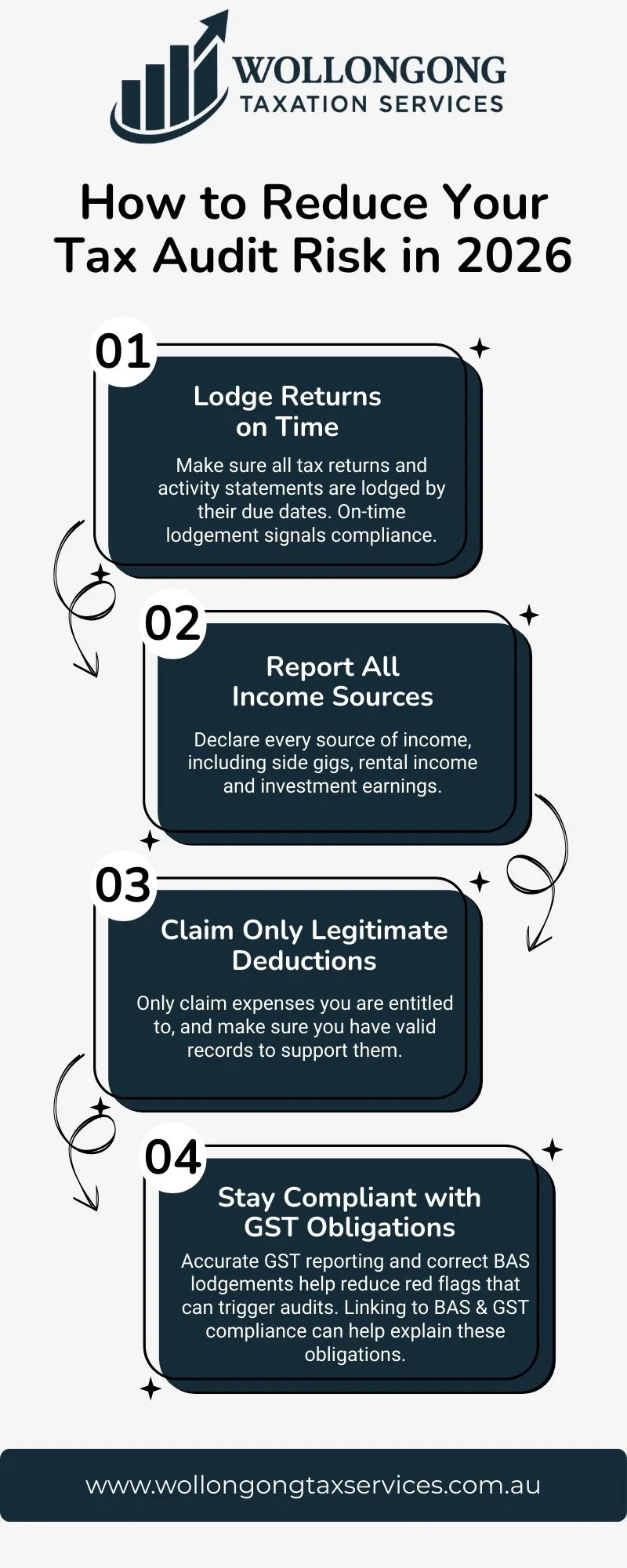
How to Reduce Your Tax Audit Risk in 2026
Conclusion
Facing a tax audit can feel intimidating, but preparation and understanding are your best tools. Knowing what triggers an audit, how the ATO conducts reviews, and what penalties may apply helps you stay in control. By keeping accurate records, lodging returns on time, reporting all income, and claiming only legitimate deductions, you can significantly reduce your audit risk in 2026.
If an audit does occur, responding promptly, cooperating fully, and seeking professional advice can make the process smoother and reduce potential penalties or interest. Remember, a tax audit is often a request for clarification rather than an accusation of wrongdoing.
For Australian taxpayers and small business owners Wollongong Taxation Services offer practical guidance on tax return documents, BAS & GST compliance, and preparing for audits. Using trusted, professional support can help you lodge your returns accurately, stay compliant with the ATO, and navigate audits with confidence.
Related Articles
Tax Laws in Australia: Guide for Residents & Non-Residents
ATO BAS Lodgement Guide: How to File Accurately and Avoid Penalties
FAQs
What triggers a tax audit in 2026?
The ATO looks for mismatches between what you report and third‑party data, unusual deductions, late lodgements, errors in GST and rental income claims, and cash‑based business patterns.
How long does a tax audit take?
An audit can take weeks to months depending on how quickly you provide required documents and how complex your affairs are.
What happens if I cannot pay audit penalties?
The ATO offers payment plans and may negotiate terms if you can’t pay immediately. Contact them early to discuss options.