
Tax laws in Australia explain how income is taxed and who must pay. They cover wages, freelance work, investments, and some overseas income. The Australian Taxation Office (ATO) is responsible for collecting taxes and making sure the rules are followed. Understanding tax laws is important for all individuals, including employees, students, migrants, and high-income earners. It helps you know your tax obligations, income thresholds, and Medicare contributions. Knowing these rules can prevent mistakes and penalties. This guide explains tax laws in Australia for individuals, covering who pays tax, how income tax brackets work, the Medicare levy, and other important rules.
Why Understanding Tax Laws in Australia Matters
Understanding tax laws in Australia is important because everyone who earns money may have to pay tax. According to the ATO’s taxation guidance, paying the correct amount helps fund public services like healthcare, schools, roads, and welfare. Knowing the rules also helps you avoid mistakes that can lead to fines or extra charges from the Australian Taxation Office (ATO).
It allows you to:
- Plan your finances effectively
- Claim the right deductions
- Stay compliant with the law
For individuals, understanding your obligations, deadlines, and thresholds makes managing income and taxes less stressful.
Overview of the Australian Taxation System
The Australian taxation system is how the government collects money to pay for public services. It is mainly managed by the Australian Taxation Office (ATO). Taxes in Australia are mostly federal, but states also collect some taxes, like stamp duty.
The system includes:
- Income tax (the main way individuals contribute)
- Medicare levy
- Goods and services tax (GST)
- Capital gains tax
The system applies to Australian residents for tax purposes and certain non-residents who earn money in Australia. Understanding how the system works helps you know what you need to report, when to lodge your tax return, and how your contributions support public services.
Who Pays Tax in Australia
In Australia, most people who earn money have to pay tax. This includes:
- Employees
- Freelancers
- Business owners
According to ATO residency rules, Australian residents for tax purposes must report all their income, even from overseas. Non-residents usually pay tax only on income earned in Australia. Students, migrants, and expats may also need to pay tax depending on their residency status and income. High-income earners may face higher tax rates and extra levies, like the Medicare Levy Surcharge.
The Australian Taxation Office (ATO) decides who is considered a resident for tax purposes. Knowing whether you must pay tax helps you avoid penalties and ensures you meet your legal obligations.
Understanding Tax Law in Australia
Tax law in Australia sets out the rules for how income is taxed and how taxes are collected. According to the Federal Register of Legislation, the main laws are:
- Income Tax Assessment Act 1997
- Income Tax Assessment Act 1936
These acts explain how to calculate tax, claim deductions, and report income. The Taxation Administration Act covers how the Australian Taxation Office (ATO) manages tax, including audits and penalties. The Taxation Law Act allows the government to update rules and introduce changes.
Understanding these laws helps individuals know their rights and responsibilities. Following them correctly ensures you pay the right amount of tax and meet all legal requirements.
Australian Income Tax Rates and Thresholds
Australia uses a progressive tax system, which means people pay more tax as their income rises. According to the ATO’s official tax rates, for the 2025–26 income year, the tax brackets for residents are set by the Australian Taxation Office (ATO) and do not include the Medicare levy.
Official Resident Income Tax Rates for 2025–26
| Taxable income | Tax rate |
| $0 – $18,200 | Nil |
| $18,201 – $45,000 | 16c for each $1 over $18,200 |
| $45,001 – $135,000 | $4,288 plus 30c for each $1 over $45,000 |
| $135,001 – $190,000 | $31,288 plus 37c for each $1 over $135,000 |
| $190,001 and over | $51,638 plus 45c for each $1 over $190,000 |
The above rates do not include the Medicare levy of 2%.
These rates apply to Australian residents for tax purposes. Non-residents pay tax on Australian‑sourced income at different rates, and they do not get the tax‑free threshold.
The tax‑free threshold means a resident does not pay tax on the first $18,200 of income. This threshold remained unchanged in 2025–26 compared to the previous year.
According to the Treasury Laws Amendment legislation, from 1 July 2026, the tax rate on income between $18,201 and $45,000 is set to be gradually reduced by law, lowering the rate to 15% and then to 14% after that year.
Understanding these brackets helps you estimate your tax bill and plan your finances better.
Medicare Levy and Medicare Levy Surcharge
According to the ATO’s Medicare levy guidance, the Medicare levy is a tax that helps fund Australia’s public healthcare system. Most Australian residents pay 2% of their taxable income as the levy. Some low-income earners may pay less or nothing.
The Medicare Levy Surcharge (MLS) is an extra tax for high-income earners who do not have private hospital cover. It applies if your income is above certain thresholds.
Key thresholds include (as of 2025–26):
- Singles earning over $90,000
- Families earning over $180,000
The surcharge rate ranges from 1% to 1.5% depending on income.
Paying the levy and surcharge correctly ensures you are covered under Medicare and avoids penalties. The ATO provides guidance on how to calculate and report both.
How the Australian Taxation Office Administers Tax
The Australian Taxation Office (ATO) is responsible for collecting taxes and making sure everyone follows the rules. They manage:
- Income tax
- Medicare levy
- GST
- Other taxes
Every Australian resident gets a Tax File Number (TFN), which is used to identify your tax records. The ATO requires individuals to lodge a tax return each year if they earn income above the tax-free threshold.
The ATO also reviews records and can conduct audits if anything appears to be incorrect. Keeping accurate records of income, deductions, and receipts is important. Following ATO guidance ensures compliance and helps avoid penalties or extra charges.
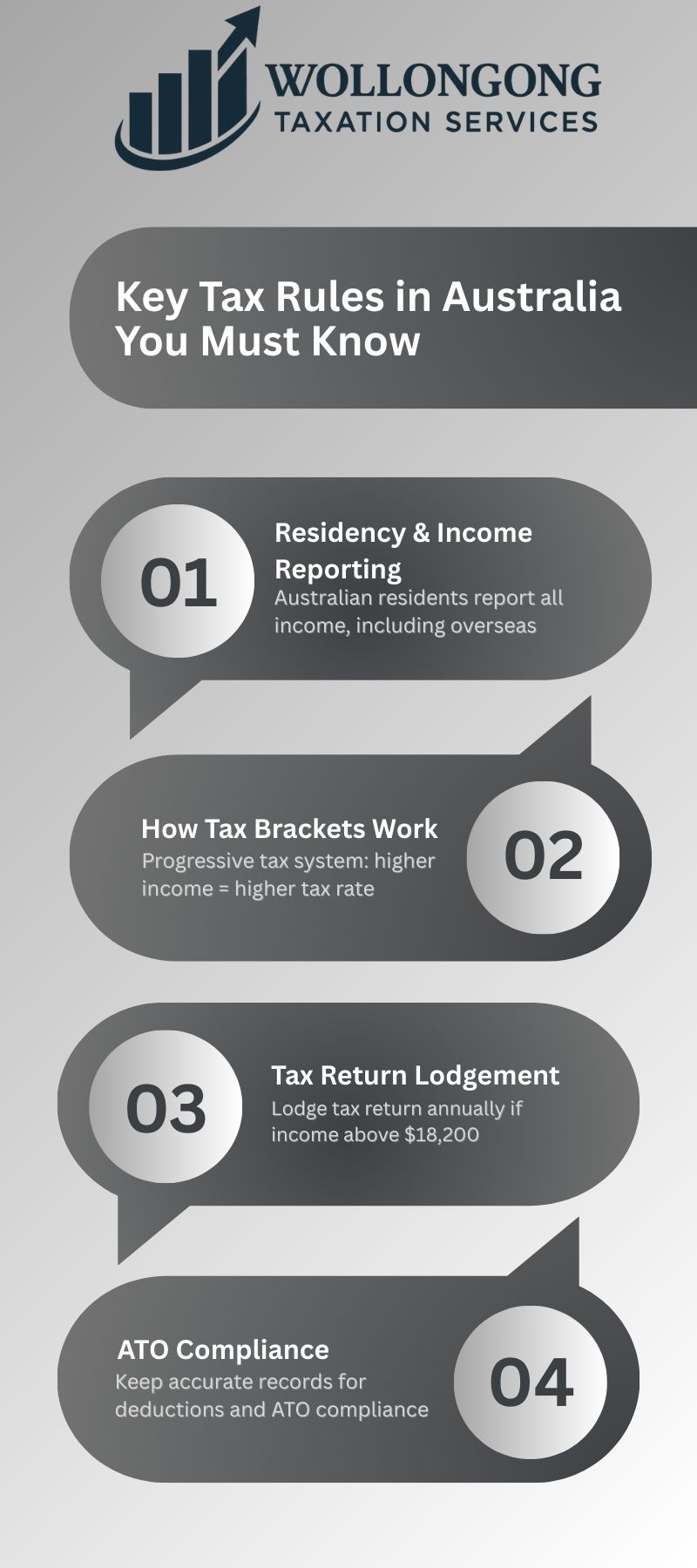
Key Tax Rules in Australia You Must Know
When Professional Tax Support Is Useful
Sometimes tax rules can be complicated, and professional help is useful. According to the Tax Practitioners Board (TPB) guidance, consider seeking support from a registered tax agent if you:
- Have foreign income
- Changed residency status
- Run a business
- Are a high-income earner managing the Medicare Levy Surcharge and other obligations
Registered tax agents and BAS agents can:
- Ensure your tax return is correct
- Help you claim eligible deductions
- Save time on compliance
- Guide record-keeping and ATO rules
Using professional support is not mandatory, but it can reduce mistakes and give peace of mind when dealing with complex tax situations. You can verify a tax agent’s registration status on the Tax Practitioners Board website.
Conclusion
Understanding tax laws in Australia helps you meet your legal obligations and avoid mistakes. According to current ATO requirements, residents and some non-residents must pay income tax based on tax brackets and the tax-free threshold. You may also need to pay the Medicare levy or Medicare Levy Surcharge if your income is above certain limits.
For reliable support with your tax obligations, consider Wollongong Tax Services, which provides expert guidance on Australian tax laws, income tax returns, and Medicare levy compliance for individuals.
Related Articles
2025 ATO Guidance For Employers: Simple Tax & Tips For Apprentices
ATO BAS Lodgement Guide: How to File Accurately and Avoid Penalties
FAQs
Who pays tax in Australia if income is below the threshold?
According to the ATO’s tax rates guidance, residents earning less than $18,200 do not pay income tax. However, other obligations like the Medicare levy may still apply in some cases depending on individual circumstances.
What income tax brackets apply in 2025–26?
Based on the ATO’s official tax rates, the tax brackets range from 0% up to 45%, depending on income. Residents use the tax-free threshold of $18,200, while non-residents pay different rates without access to the tax-free threshold.
Is the Medicare levy mandatory?
According to ATO Medicare levy information, yes, most residents pay 2% of taxable income. Some low-income earners may be exempt, and high-income earners without private cover may pay the Medicare Levy Surcharge as an additional charge.